 admin
admin Master the Basics: How to Start Investing and Build Wealth in India
Building wealth doesn’t require a high income or complex financial knowledge-it requires clarity, consistency, and the right starting steps. Many beginners hesitate because they believe investing is risky or only meant for experts. But the truth is that anyone can begin their financial journey with simple, structured steps. Understanding how to start investing gives you the confidence to make smart decisions that support your long-term goals.
Before you put your money into any investment, it’s important to understand your financial situation, risk capacity, and the options available in India. This foundational approach ensures that your investment choices align with your future plans. By learning how to start investing, you build the discipline needed for steady, sustainable wealth creation.
Here’s what beginners should focus on:
- Review your portfolio every 6–12 months and rebalance when needed
- Identify short-term and long-term financial goals
- Create a basic monthly budget to understand your cash flow
- Build an emergency fund covering at least 3–6 months of expenses
- Learn the basics of risk types-low, moderate, and high
- Start with beginner-friendly investment options like SIPs, index funds, or recurring deposits
- Avoid impulsive investments that promise quick returns
Why You Should Learn How to Start Investing Now
Inflation silently reduces your purchasing power every year, and most Indians don’t realize how quickly it erodes their savings. When your bank account gives you only 2.5%–3% returns while inflation stays around 6% or more, your money is actually shrinking in real value. This means relying only on savings is not enough to secure your financial future. Understanding how to start investing becomes essential if you want your money to grow faster than inflation.
When you invest-even small amounts-you allow your money to work for you instead of sitting idle. Investments benefit from compounding, where your returns generate more returns over time. This steady growth helps you beat inflation, build long-term wealth, and reach your financial goals sooner. Learning how to start investing today ensures you don’t lose valuable years of potential growth.
Here’s why starting now matters:
- Inflation reduces the real value of your savings each year
- Small investments grow significantly through compounding
- Early investing gives you a longer time horizon for wealth creation
- You develop financial discipline and better money habits
- Even beginners can start with low-risk options like SIPs or government schemes
- Investing helps you achieve goals like buying a home, retirement, or children’s education
Step 1: Define Your Financial Goals Before You Invest
The first step in understanding how to start investing is to clarify your “why.”
Are you saving for:
- A dream home or car?
- Your child’s future education?
- A peaceful retirement?
- An emergency medical fund?
Example:
Let’s say you want to save ₹10 lakhs in 10 years for a child’s education. That’s roughly ₹8,300/month at an 8% annual return. Once your goals are clear, your investment path becomes obvious.
Pro Tip: Write down your goals, target amount, and time horizon. This will guide your choice of assets like mutual funds, SIPs, gold, or PPF.
Step 2: How to Start Investing with Just ₹500 in India
There’s a widespread myth that you need a huge sum to begin. But the truth is, you can start investing with just ₹500/month using tools like Systematic Investment Plans (SIPs).
Example:
If you start a SIP of ₹500/month at age 25, earning an average 10% annually, by 45 you’ll have over ₹18.7 lakhs.
That’s the power of starting early.
Don’t wait until you have ₹1 lakh. The best answer to “how to start investing when you feel broke” is to just begin with what you have.
Step 3: Understand the Available Investment Options
Understanding how to start investing also means knowing where to invest. Let’s explore the most beginner-friendly options in India for 2025:
Common Investment Tools:
- SIPs (Systematic Investment Plans) – Start small, grow long-term
- PPF (Public Provident Fund) – Tax-free and backed by the government
- NPS (National Pension System) – Retirement-focused with tax benefits
- FDs (Fixed Deposits) – Safe but low returns
- Gold ETFs or Digital Gold – Hedge against inflation
- Real Estate – High cost, long-term commitment
Tip: Diversify. Don’t put all your money into one type. If you’re just learning how to start investing, build a balance of safety and growth.
Step 4: The Power of Compounding – Your Secret Weapon
The earlier you learn how to start investing, the more compounding works in your favor.
Example:
- Starting at 25: Invest ₹5000/month = ₹1 crore+ at retirement
- Starting at 35: Same amount = ₹50 lakhs only
Even Warren Buffett credits compound interest for his wealth. Start early, invest consistently. That’s the #1 lesson in how to start investing smartly.
Step 5: Open the Right Accounts to Start Investing
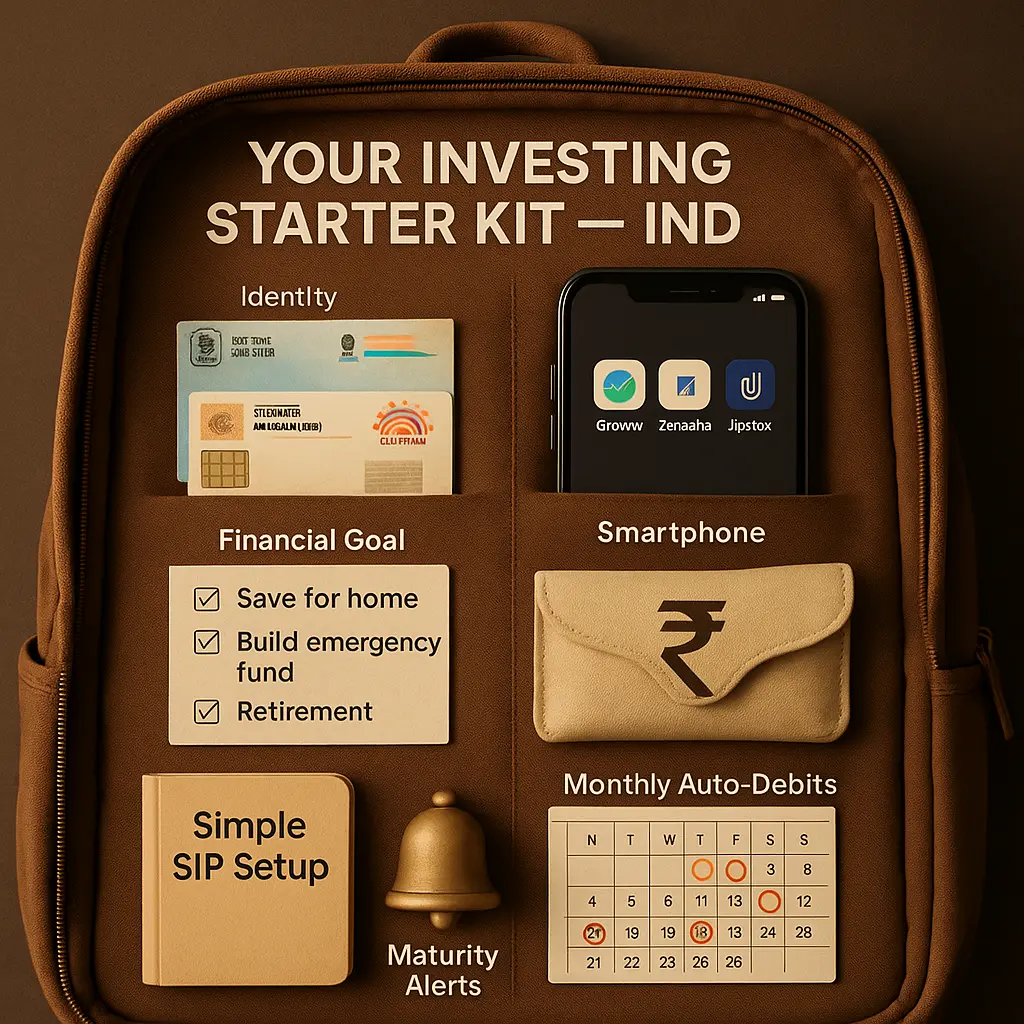
To get started, you need the right tools. Here’s a checklist:
- PAN & Aadhaar linked to mobile
- A savings account with internet banking
- Investment apps like Groww, Zerodha, or Paytm Money
- KYC completed
Example:
If you’re 21 and have a smartphone, you can open a SIP in 10 minutes. This ease of access is changing how to start investing for India’s Gen Z and millennials.
Step 6: Automate Your Investments
One of the biggest hacks in how to start investing is to remove manual effort. Set up auto-debit instructions in your app or bank.
When money moves automatically, it eliminates the need for willpower.
Example:
Auto-debit ₹500 every 5th of the month into your SIP. You won’t even notice it, but over time you’re building wealth.
Step 7: Track Your Portfolio – Don’t Fly Blind
Learning how to start investing is only step one. Staying invested and tracking performance is step two.
Use apps or spreadsheets to:
- Monitor returns
- Rebalance your portfolio
- Track maturity dates
Tip: Set monthly reminders. Investing without tracking is like flying a plane without a dashboard.
Risk Tips:
- SIPs: Moderate risk, great for long-term
- PPF/FD: Low risk, low return
- Stocks/Crypto: High risk, high reward (not for beginners)
Diversify to reduce risk. That’s how smart investors grow.
Step 9: Build an Investing Mindset
Investing is more about discipline than knowledge. Even with limited understanding, consistent investing works wonders.
Example:
Two people invest ₹5000/month:
- Person A stops in 2 years
- Person B continues for 10 years
Person B will have 5x the wealth.
That’s the mindset you need when learning how to start investing.

Step 10: Use a Personal Wealth Tracker – My Wealth Locker
Whether you’re starting today or already investing, managing it all in one place is a game-changer. That’s where My Wealth Locker app helps:
Store & Track:
- Bank & post office FDs
- Gold, silver, jewellery
- Mutual funds, SIPs
- NPS, bonds
- Real estate, NSC, RD
Features:
- One dashboard to track all assets
- Maturity alerts on your investments
- 100% privacy – No server, no cloud
Peace of mind, financial clarity.
Download My Wealth Locker today and take the stress out of money.

Common Mistakes Beginners Make When Starting to Invest
Even after learning the basics, many beginners fall into avoidable traps that slow down their wealth-building journey. Understanding these mistakes helps you make smarter, more confident decisions from day one.
1. Waiting for the “perfect time”
Many people delay investing because they think markets are too high, too low, or too risky. The truth is: consistent investing beats perfect timing.
2. Investing without clear goals
Putting money somewhere without knowing why makes it harder to stay disciplined. Clear goals guide your choices and keep you focused.
3. Focusing only on high returns
Chasing quick gains often leads to poor decisions. Balanced, long-term investments perform better for beginners.
4. Ignoring risk capacity
Every investor has a different comfort level with risk. Matching investments with your personal risk profile protects your peace of mind.
5. Not reviewing investments annually
Your financial situation changes. Reviewing and rebalancing your portfolio once a year keeps it aligned with your goals.
Final Takeaway
As you reach the end of this guide, one thing becomes clear: building wealth is not about timing the market or mastering complicated financial strategies. It starts with understanding how to start investing in a simple, practical, and consistent way. When you take control of your money-even with small steps-you shift from being a passive saver to an active wealth creator. And that shift alone can reshape your financial future.
The most important part of this journey is momentum. Once you begin setting goals, automating your savings, choosing beginner-friendly investments, and reviewing your progress, your confidence grows. The earlier you begin, the more advantage you gain from compound growth, disciplined habits, and long-term planning. Learning how to start investing empowers you to make informed decisions instead of relying on luck, guesswork, or outdated financial advice.
Your next step doesn’t need to be big-it just needs to be intentional. Whether you start with ₹500 or ₹5,000, the key is consistency. Every investment you make today is a step toward financial independence tomorrow. So take action, stay committed, and let your money work for you. Your future self will thank you for starting now.