
 admin
admin 1. Introduction
In today’s fast-paced financial environment, achieving long-term financial stability requires more than just earning and spending wisely. A strategic balance between liquid savings and growth-oriented investments is essential to secure both immediate security and future wealth. Professionals, millennials, and families alike are increasingly recognizing that understanding the difference between short-term financial cushions and long-term wealth-building strategies is no longer optional—it is critical for measurable financial outcomes.
The debate of savings vs investing is not merely theoretical. It directly impacts one’s ability to cover unexpected expenses, achieve life goals, and grow wealth over time. While savings provide safety and liquidity, investments offer the potential for compound growth and inflation-beating returns. Striking the right balance between these two components ensures that you are neither overexposed to market risks nor underutilizing opportunities for wealth accumulation.Understanding the trade-offs and strategic implications of savings vs investing is key to achieving both financial security and long-term growth
Key reasons why balancing savings and investing is essential include:
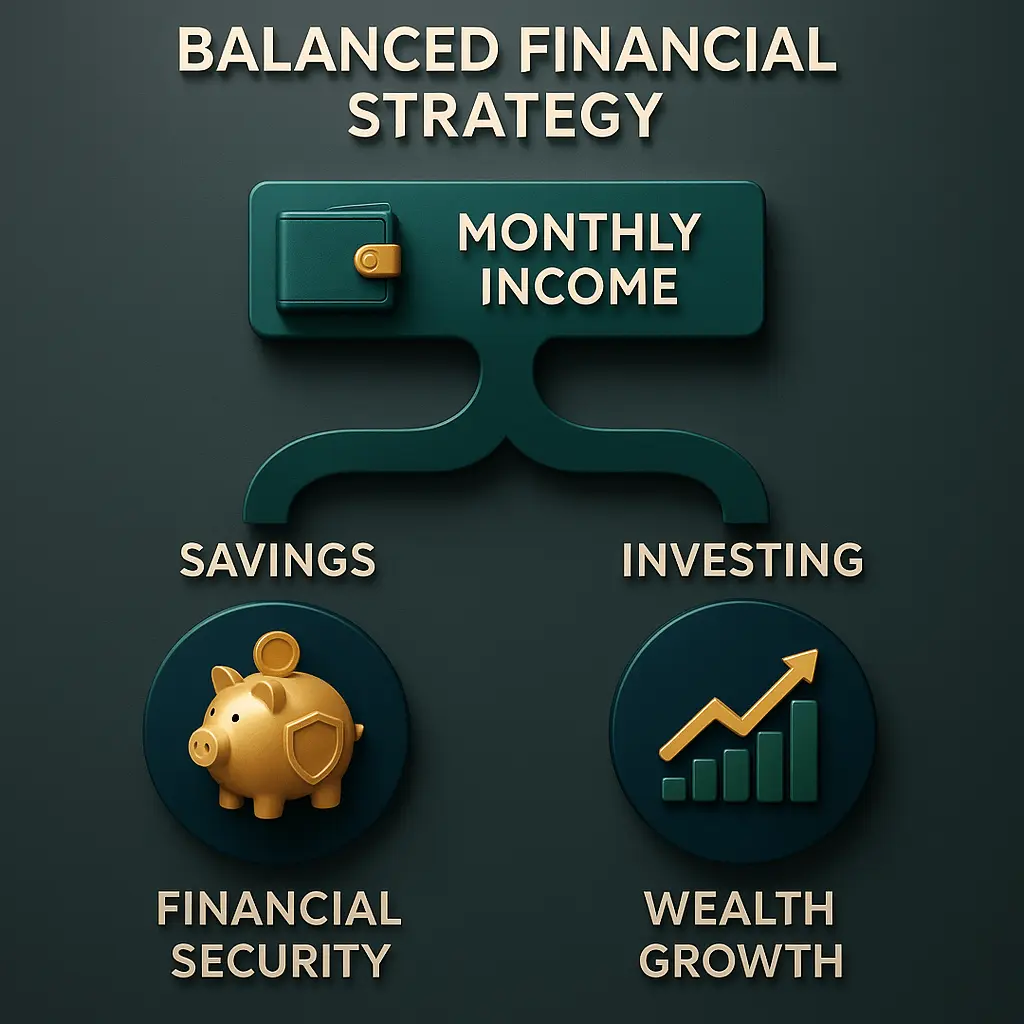
- Financial Security: Maintaining adequate savings ensures that unexpected expenses, emergencies, or short-term goals can be met without resorting to high-interest debt.
- Wealth Growth: Strategic investments provide long-term returns that can significantly outpace inflation, allowing your assets to appreciate over time.
- Measurable Outcomes: A disciplined approach to managing savings and investments enables professionals to quantify progress through metrics such as emergency fund coverage, portfolio growth, and return on investment.
- Enhanced Decision-Making: Understanding the trade-offs between liquidity and growth empowers individuals to make informed financial choices aligned with career, family, and retirement goals.
Moreover, modern financial tools and apps are transforming how individuals manage their finances, making it easier to monitor both savings and investments in real time. By integrating technology into financial planning, users can optimize their approach, maintain consistent tracking, and improve overall wealth discipline.
Ultimately, mastering the balance between savings vs investing is more than a personal finance exercise-it is a strategic, data-driven approach to achieving sustainable financial growth, reducing risk exposure, and creating measurable long-term outcomes.

2. Understanding Savings
Savings form the foundation of a strong financial strategy. While investing drives long-term growth, savings provide the stability, liquidity, and security necessary to navigate both predictable and unexpected expenses. Understanding how to structure and manage your savings is critical when evaluating savings vs investing, ensuring that you can achieve both short-term financial stability and long-term wealth accumulation.
2.1 What Savings Really Mean
Savings represent the portion of income set aside rather than spent on immediate consumption. Unlike investments, which carry varying degrees of risk and potential for growth, savings prioritize preservation of capital and accessibility. Key characteristics of effective savings include:
- Liquidity: Savings should be readily accessible to cover immediate or short-term financial needs without penalties or delays.
- Safety: Funds are held in low-risk accounts such as savings accounts, fixed deposits, or money market instruments, protecting principal from market volatility.
- Emergency Fund Metrics: A well-structured emergency fund typically covers 3–6 months of essential expenses, providing a buffer against job loss, medical emergencies, or unforeseen major expenses.
By defining clear metrics and objectives for savings, individuals and families can reduce financial stress, maintain stability, and create a foundation for strategic investing decisions.
2.2 Benefits of Prioritizing Savings
Beyond security, maintaining structured savings delivers measurable business and personal outcomes:
- Cost Savings: Readily available funds reduce the need to borrow at high interest rates, minimizing unnecessary financial costs.
- Risk Reduction: Having liquid assets mitigates exposure to financial shocks, safeguarding both personal and family financial health.
- Improved Decision-Making: Tracking savings ensures that capital is available for both planned expenditures and strategic opportunities without disrupting long-term investment plans.
- Performance Visibility: Data-driven monitoring allows individuals to measure progress against short-term goals, facilitating better financial discipline.
Properly managed savings create a safety net that complements investment strategies, ensuring that growth-oriented assets are not prematurely liquidated due to emergencies.
2.3 Tools and Metrics for Tracking Savings
Effective savings management often relies on structured tracking and organization. Modern financial tools enable professionals and families to monitor their savings goals, optimize allocation, and integrate these insights into broader wealth management strategies. For example, My Wealth Locker allows users to track savings, organize account information, and maintain an accurate record of financial progress, making the monitoring process both efficient and actionable.
A practical way to structure savings is by distinguishing between short-term goals and emergency funds:
| Savings Type | Purpose | Recommended Metrics | Typical Time Horizon |
|---|---|---|---|
| Short-Term Savings Goals | Planned expenses like vacations, home upgrades | Amount needed for specific goals; liquidity | 6–12 months |
| Emergency Fund Goals | Unplanned financial shocks | 3–6 months of essential living expenses | Immediate availability |
By clearly segmenting funds and tracking them digitally, individuals can maintain liquidity, achieve measurable outcomes, and make informed decisions about when to divert capital into investments. This structured approach also ensures that evaluating savings vs investing is grounded in actual financial metrics rather than assumptions.
3. Understanding Investing
Investing is a critical component of long-term wealth creation. While savings provide security, investments enable capital to grow over time, leveraging market opportunities and compounding returns. Understanding the fundamentals of investing, assessing risk, and monitoring performance are essential for making informed decisions in the context of savings vs investing.
3.1 Investment Fundamentals
Investments involve allocating money into financial instruments with the expectation of generating returns over time. Unlike savings, which prioritize liquidity and safety, investments focus on growth, requiring careful planning and risk management. Core principles include:
- Risk and Reward: Higher potential returns generally come with greater risk. Understanding personal risk tolerance is essential to select appropriate instruments.
- Diversification: Spreading investments across stocks, bonds, ETFs, and mutual funds reduces concentration risk and smooths portfolio performance.
- Time Horizon: Longer investment horizons allow more aggressive strategies, leveraging the power of compounding to maximize wealth accumulation.
Common investment vehicles:
- Stocks: Equity investments representing ownership in a company; provide potential for high returns but can be volatile.
- Bonds: Debt instruments offering fixed interest payments; generally lower risk but lower returns than stocks.
- Exchange-Traded Funds (ETFs): Diversified baskets of stocks or bonds traded like equities; offer liquidity and risk diversification.
- Mutual Funds: Professionally managed pooled investments; suitable for investors seeking exposure to diversified portfolios without active management.
3.2 The Strategic Value of Investing
Investing is not just about growing wealth-it is a strategic tool to achieve measurable financial outcomes:
- Compound Growth: Investments can generate returns on both the principal and accrued interest or dividends, accelerating wealth accumulation over time. For example, a consistent investment of ₹10,000 per month in a diversified mutual fund yielding 12% annually could grow to over ₹50 lakhs in 20 years.
- Inflation Protection: Investments have the potential to outpace inflation, preserving the purchasing power of capital over time.
- Portfolio Optimization: Regularly assessing asset allocation allows investors to balance growth and risk, ensuring that long-term goals are met without compromising financial stability.
Strategically integrating investments into your financial plan ensures that funds are not left idle in low-interest savings accounts but are actively working toward long-term objectives.
3.3 Monitoring Investment Performance
Effective investing requires ongoing performance evaluation to maximize returns and minimize risk. Key monitoring practices include:
- Tracking Returns: Evaluate absolute and relative returns on stocks, bonds, ETFs, and mutual funds against benchmarks.
- Risk Assessment: Continuously measure portfolio volatility and exposure to market fluctuations.
- Portfolio Rebalancing: Adjust allocations periodically to maintain the desired risk profile and meet changing financial goals.
Digital tools enhance monitoring and decision-making. For instance, My Wealth Locker enables investors to track portfolio performance in real time, analyze returns across asset classes, and maintain a comprehensive record of investments. This visibility ensures that decisions around savings vs investing are data-driven and aligned with long-term financial objectives.
Investing, when approached with discipline and informed oversight, complements savings by generating measurable financial outcomes, enabling risk-adjusted growth, and supporting strategic wealth-building objectives. Integrating technology like My Wealth Locker further strengthens oversight, ensuring investments are both productive and aligned with overall financial goals.
4. Comparing Savings and Investing
Balancing financial security with growth requires a clear understanding of the trade-offs between savings and investing. By comparing risk, reward, liquidity, and time horizon, professionals, millennials, and families can make informed decisions that maximize measurable financial outcomes. Evaluating savings vs investing is essential for designing a strategy that aligns with both short-term needs and long-term wealth objectives.
4.1 Risk vs Reward: A Data-Driven Comparison
One of the most fundamental distinctions between savings and investments is the relationship between risk and potential reward.
- Savings: Low-risk instruments like savings accounts, fixed deposits, and money market funds preserve principal but offer limited returns, usually insufficient to outpace inflation.
- Investing: Assets such as stocks, ETFs, bonds, and mutual funds carry variable risk levels. While higher-risk investments have the potential for significant returns, they may also experience periods of volatility.
The trade-off between safety and growth underscores why savings vs investing should not be viewed in isolation. A strategic combination ensures capital preservation while enabling long-term wealth accumulation.
| Savings vs Investment: Risk Levels and Expected Returns | Risk Level | Expected Annual Return | Liquidity |
|---|---|---|---|
| Savings Accounts / Fixed Deposits | Low | 3–6% | High |
| Bonds / Debt Funds | Low-Medium | 5–8% | Medium |
| Mutual Funds / ETFs | Medium | 8–12% | Medium-High |
| Stocks / Equity Investments | High | 12–18%+ | Medium-High |
This table highlights that while savings provide security, investments offer growth potential with varying degrees of risk, demonstrating the measurable value of combining both strategies in a financial plan.
4.2 Time Horizon Considerations
Time horizon significantly influences the appropriate balance between savings and investing:
- Short-Term Goals (0–3 years): Prioritize liquid savings to ensure accessibility and reduce exposure to market fluctuations.
- Medium-Term Goals (3–10 years): A blended approach of savings and moderate-risk investments balances security with growth potential.
- Long-Term Goals (10+ years): Higher exposure to equities or growth-oriented funds leverages compounding, maximizing wealth over decades.
Evaluating savings vs investing through the lens of time horizon ensures that funds allocated to investments are not prematurely withdrawn, preserving long-term returns while maintaining necessary liquidity.
4.3 Opportunity Cost and Strategic Decision-Making
Decisions between allocating funds to savings or investments involve evaluating the opportunity cost of idle capital versus potential growth:
- Excessive Savings: While secure, funds held in low-interest accounts may lose purchasing power over time due to inflation.
- Aggressive Investing Without Liquidity: Overexposure to high-risk assets may jeopardize short-term financial stability if unexpected expenses arise.
Strategic financial planning, incorporating real-time tracking and performance insights, is essential for optimizing the savings-investment balance. Tools like My Wealth Locker allow individuals to monitor cash reserves, track investment performance, and maintain organized financial records. This enables data-driven decisions and ensures savings vs investing strategies align with measurable financial goals.
By understanding risk, reward, time horizon, and opportunity cost, professionals and families can craft a balanced financial approach that delivers both security and growth, demonstrating tangible long-term value.
5. Building Your Personal Balance
Achieving financial stability and long-term growth requires more than understanding savings and investments-it demands a structured, data-driven approach to aligning funds with your goals. Professionals, millennials, and families can maximize measurable outcomes by assessing objectives, calculating the ideal savings-to-investment ratio, and leveraging technology to improve financial efficiency.
5.1 Assessing Your Financial Goals
The first step in creating a balanced financial plan is clearly defining short-term and long-term goals. Structured goal assessment ensures resources are allocated efficiently, delivering tangible outcomes:
- Identify Priorities: Categorize goals into short-term (1–3 years), medium-term (3–10 years), and long-term (10+ years) horizons.
- Quantify Objectives: Assign a monetary target to each goal to track progress and measure success.
- Evaluate Business-Impact Benefits: For professionals, this includes optimizing cash flow, reducing debt costs, and freeing capital for strategic investments. For families, it may involve securing educational funds or retirement planning.
- Scenario Planning: Consider potential risks such as income fluctuation, inflation, or market volatility to ensure goals are realistic and achievable.
Using a digital tool like My Wealth Locker, users can track both savings and investments against these objectives, monitor progress in real time, and organize all relevant financial documents, ensuring clarity and accountability.
5.2 Calculating the Ideal Savings-to-Investment Ratio
A thoughtful evaluation of savings vs investing ensures your allocations align with measurable goals and risk tolerance. Once goals are defined, the next step is determining the optimal balance between liquid savings and growth-oriented investments. A data-driven framework can guide this allocation:
- Rule-of-Thumb Approach: Many financial advisors suggest maintaining 3–6 months of living expenses in liquid savings, with the remainder allocated to diversified investments based on risk tolerance and time horizon.
- Dynamic Ratio Assessment: Periodically adjust the ratio based on changes in income, expenses, and market conditions.
- Risk Alignment: Ensure high-priority short-term goals remain fully covered by savings, while long-term objectives leverage investments for compounding growth.
By analyzing your savings vs investing allocation against measurable goals, you can make informed decisions that optimize both security and long-term wealth creation.
5.3 Leveraging Technology for Efficiency and Discipline
Technology enhances financial management by improving visibility, organization, and decision-making efficiency. Key strategies include:
- Real-Time Tracking: Monitor savings, investments, and portfolio performance on a single platform.
- Document Organization: Maintain digital records of account statements, investment confirmations, and tax-related documents for faster reporting and audit readiness.
- Automated Reminders and Analytics: Stay disciplined with recurring savings contributions, investment rebalancing, and goal progress monitoring.
Applications like My Wealth Locker consolidate these functions, allowing users to track savings, monitor investment performance, and organize all financial documents. This creates a streamlined, data-driven approach to financial planning, reduces the risk of missed opportunities, and enhances cost efficiency.
By systematically assessing goals, calculating the right savings-to-investment ratio, and leveraging technology, individuals can achieve a disciplined, strategic financial balance. This ensures measurable outcomes, mitigates risks, and supports long-term wealth growth while maintaining liquidity for unforeseen needs.
6. Behavioral Insights: How to Stick to Your Plan
Financial planning is as much a psychological exercise as it is a numbers game. Understanding behavioral finance patterns-how emotions, biases, and habits influence decisions-can dramatically improve adherence to a strategic savings and investment plan. Professionals, millennials, and families who integrate these insights into their approach are better positioned to achieve measurable outcomes while avoiding common pitfalls in the savings vs investing debate.
6.1 Understanding Behavioral Finance Patterns
Behavioral finance highlights the systematic ways individuals deviate from rational decision-making. Key patterns that affect savings and investments include:
- Loss Aversion: The tendency to fear losses more than valuing equivalent gains, often leading to overly conservative savings or avoidance of investing opportunities.
- Present Bias: Prioritizing immediate gratification over long-term benefits, which can reduce contributions to both savings and investments.
- Overconfidence: Believing one can consistently time the market or pick winning investments, leading to unnecessary risk exposure.
- Herd Behavior: Following market trends without independent evaluation, potentially compromising long-term financial goals.
Recognizing these tendencies is the first step in implementing strategies that reinforce discipline and ensure decisions are aligned with long-term objectives.
6.2 Actionable Strategies to Maintain Discipline
Behavioral patterns can be managed through structured, data-driven approaches:
- Automate Contributions: Set up recurring transfers to savings accounts and investment portfolios to minimize reliance on willpower.
- Set Clear Goals with Milestones: Define both short-term and long-term objectives, allowing measurable progress and positive reinforcement.
- Use Data-Driven Tracking Tools: Monitor savings and investment performance regularly to stay informed and avoid emotionally driven decisions.
- Implement the “Precommitment” Technique: Lock in contributions and investment allocations in advance to prevent deviation due to short-term impulses.
- Regularly Review and Adjust: Schedule periodic reviews to evaluate performance, rebalance portfolios, and recalibrate goals based on life changes or market shifts.
6.3 Leveraging Technology to Reinforce Habits
Modern financial apps help translate behavioral insights into actionable routines:
- Tracking and Analytics: Applications like My Wealth Locker allow users to monitor savings, investment growth, and portfolio performance in real time, reinforcing disciplined behavior.
- Visual Progress Reports: Graphs and dashboards provide immediate feedback, motivating consistent contributions and reinforcing goal achievement.
- Document Organization and Reminders: Maintaining financial documents and automated notifications reduces cognitive load, keeping users focused on long-term objectives.
By integrating behavioral insights with technology, individuals can overcome psychological biases, maintain consistent financial habits, and optimize the balance between savings and investments. Adhering to these practices ensures that the strategy for savings vs investing remains disciplined, measurable, and aligned with long-term wealth goals.
This section naturally uses the focus keyword savings vs investing three times, provides actionable behavioral strategies, and highlights My Wealth Locker as a practical tool to reinforce financial discipline.
7. Measuring the Impact of Balanced Financial Planning
A disciplined approach to balancing savings and investments delivers tangible, measurable outcomes that extend beyond individual financial security. By assessing cost savings, risk mitigation, wealth growth, and productivity, professionals, millennials, and families can quantify the strategic value of informed financial planning. Understanding the measurable benefits of savings vs investing allows individuals to make data-driven decisions that optimize both short-term stability and long-term growth.
7.1 Cost Savings and Risk Reduction
Strategically allocating resources between savings and investments provides direct financial efficiencies:
- Lower Borrowing Costs: Maintaining adequate savings reduces reliance on high-interest credit, generating measurable cost savings over time.
- Risk Mitigation: A well-funded emergency savings buffer protects against unforeseen expenses, reducing the likelihood of forced asset liquidation or debt accumulation.
- Financial Resilience: Structured planning ensures liquidity for critical needs, minimizing exposure to market volatility and life events that could compromise long-term goals.
By tracking these metrics, individuals can quantify the protective impact of disciplined financial behavior, translating planning into tangible economic benefits.
7.2 Wealth Growth and ROI
Balanced financial planning enhances wealth accumulation through growth-oriented strategies:
- Compounded Returns: Investments in diversified portfolios, including stocks, bonds, ETFs, and mutual funds, provide compounded growth over time.
- Portfolio Optimization: Regular monitoring allows for adjustments that maximize returns relative to risk tolerance.
- Measurable Performance: Tracking returns against benchmarks and objectives provides clarity on whether strategies are meeting long-term goals.
Tools like My Wealth Locker make it easier to analyze investment performance, track asset growth, and maintain organized financial records, ensuring that wealth-building strategies are actionable and data-driven.
7.3 Productivity and Strategic Value
Financial discipline also drives efficiency and decision-making productivity:
- Time Savings: Organized accounts and digital tracking reduce administrative overhead, freeing time for strategic financial planning and career or business focus.
- Informed Decisions: Access to real-time data on cash flow, savings, and investments allows quicker, evidence-based choices.
- Goal Alignment: Clear visibility into progress enhances accountability and motivation, ensuring financial actions consistently support personal and professional objectives.
By integrating technology, structured planning, and consistent monitoring, individuals can translate the theoretical benefits of savings vs investing into measurable, business-like outcomes. The result is a financial strategy that delivers not only security and growth but also improved efficiency, discipline, and long-term wealth sustainability.
8. Common Mistakes and How to Avoid Them
Even the most well-intentioned financial plans can falter due to common errors in managing savings and investments. Identifying these mistakes-and implementing data-driven strategies to avoid them-ensures measurable financial outcomes, risk reduction, and long-term wealth growth. Professionals, millennials, and families often encounter pitfalls when balancing savings vs investing, but awareness and disciplined action can mitigate these risks.
8.1 Saving Without Investing
- The Pitfall: Excessive allocation to low-interest savings accounts may secure liquidity but often results in capital erosion due to inflation.
- Impact: Funds that remain idle miss opportunities for growth, delaying long-term financial goals such as retirement planning or wealth accumulation.
- Solution: Establish a structured investment plan for surplus savings. Diversifying across stocks, bonds, mutual funds, and ETFs can generate compounded returns while maintaining necessary liquidity. Tools like My Wealth Locker allow users to track both savings and investments, ensuring balanced capital allocation.
8.2 Aggressive Investing Without Liquidity
- The Pitfall: Overexposure to high-risk investments without a safety buffer can create financial vulnerability during emergencies or market downturns.
- Impact: Forced liquidation of growth assets can lead to losses and compromise long-term objectives.
- Solution: Maintain a well-funded emergency savings account while pursuing growth investments. Digital platforms like My Wealth Locker help monitor liquidity levels and assess the alignment of investments with short-term cash needs, reducing exposure to unnecessary risk.
8.3 Ignoring Analytics and Performance Metrics
- The Pitfall: Failing to measure returns, risk exposure, or portfolio allocation can result in suboptimal financial decisions.
- Impact: Investors may unknowingly underperform relative to benchmarks or fail to rebalance, jeopardizing growth potential.
- Solution: Regularly review performance metrics and adjust strategies based on data. Financial tools provide dashboards, real-time analytics, and alerts, enabling informed decision-making and reinforcing discipline.
8.4 Poor Tracking and Document Management
- The Pitfall: Disorganized accounts, missing statements, or inconsistent tracking make it difficult to evaluate progress or prepare for audits, taxes, and goal planning.
- Impact: Inefficiency, missed opportunities, and errors in assessing both savings and investments can erode financial outcomes.
- Solution: Centralize tracking and document management. My Wealth Locker allows users to consolidate account information, monitor savings and investment performance, and maintain organized digital records for quick analysis and reporting.
By recognizing these common errors and adopting structured, technology-supported strategies, individuals can navigate the challenges of savings vs investing effectively. A disciplined approach, informed by analytics and supported by robust tools like My Wealth Locker, ensures that both short-term security and long-term growth objectives are consistently achieved.
9. Conclusion
Balancing savings and investments is the cornerstone of long-term financial stability and measurable wealth growth. By strategically allocating funds between liquid savings and growth-oriented investments, individuals can protect against financial shocks, reduce risk, and capitalize on compounding returns.
The debate of savings vs investing is not merely theoretical-it has tangible, data-backed implications for cost savings, risk management, and productivity. A disciplined approach ensures that short-term needs are met without sacrificing long-term financial objectives, creating a sustainable path toward wealth accumulation and financial resilience.
Leveraging tools like My Wealth Locker enhances this process by tracking progress, organizing documents, and providing actionable insights, making it easier to maintain financial discipline and make informed decisions.
Ultimately, integrating structured savings with strategic investing delivers measurable outcomes, empowering professionals, millennials, and families to build a stronger financial future with confidence and clarity.
10. Call-to-Action
Taking control of your financial future begins with disciplined action and structured planning. The balance between savings and investments is not just a concept-it is a measurable strategy that drives long-term wealth, risk mitigation, and financial clarity. Understanding savings vs investing is the first step toward creating a roadmap that aligns your short-term needs with long-term goals.
Start today by tracking your savings, monitoring investment performance, and organizing your financial documents to make data-driven decisions. Applications like My Wealth Locker simplify this process, providing real-time insights into your portfolio, automating goal tracking, and consolidating all essential financial records in one secure platform.
By embracing structured financial management and leveraging tools designed for clarity and efficiency, you can confidently navigate the trade-offs of savings vs investing, optimize your capital allocation, and achieve measurable outcomes that strengthen your financial foundation.
Take the step now-track, save, and invest with precision and discipline to secure a stronger, more resilient financial future.